▶ Heidi Health has quietly become one of the most widely used AI products in Australia, powering nearly two million clinical visits a week and changing how doctors document care. In this re-release of the year’s most downloaded episode, Georgie Healy sits down with Heidi co-founder and CEO Dr Tom Kelly to unpack how that success was built, why clinicians trust it, and what the rise of medical agents means for healthcare.
Tom shares the technical decisions behind Heidi’s accuracy advantage: the surprising reason they ditched live transcription, how batch processing improves note quality, and why a two per cent gain in transcription accuracy can unlock a forty per cent jump in adoption. He also breaks down what non-technical founders must understand about LLMs, how he evaluates off-the-shelf models, and why compliance and regional infrastructure shape every product decision.
The conversation stretches well beyond medical notes — why RAG is failing many real-world use cases, how very large context windows could reshape patient care, and which AI startups may struggle as models get faster and cheaper. Plus hot takes on personal branding, the attention-hacking era, and the kinds of B2B SaaS companies he thinks will not survive.
About the guest Dr Tom Kelly is co-founder and CEO of Heidi Health, an AI clinical documentation platform used across Australian healthcare.
About the show In The Blink Of AI is hosted by Georgie Healy and produced by Day One®.
Transcript Synced · select any line to jump ▾ 0:02 Georgie Healy: Founders scale faster on Deel. Set up payroll for any country in minutes, hire anyone anywhere, get visas, handled fast and get back to building. Visit deel.com Day 1 that'S-E-L.com Day 1. What are some critical decisions you made when building Heidi? From a technical standpoint, I have to 0:30 Thomas Kelly: as a doctor, like, I can't trust the output and I have to review like every single word of every single note and like key facts are wrong. Then it very quickly kind of stops being useful. 0:39 Georgie Healy: The year of the AI Agent. Agents, agents, agents. They're changing our lives, Tom. Or are they? What do you think they can do? And what can the everyday person actually get from an agent? 0:50 Thomas Kelly: If Heidi is valuable, I as a doctor don't have to edit it very much. It basically should read my mind and write what I would have written in the room. 0:58 Georgie Healy: What kind of AI startups may not survive due to the type of problem they're solving or a very outdated approach? 1:05 Thomas Kelly: All B2B stars, yo. 1:09 Georgie Healy: What's that must do if you're building an AI powered company like Heidi Huff. Hello and welcome to in the Blink of a Eye. You guys. Guilty. It's the silly season. We got a little carried away with spicy mugs. We got a little carried away with our mulled wines. And that is why we are doing a bit of a throwback. But it's not just any throwback. It's a throwback to our most popular episode of the entire year. It's with Dr. Thomas Kelly from Heidi Health. You guys were obsessed with this episode, so if you haven't heard it before, now is your chance. He's got hot takes on rag. Why live transcripts were ditched in favor of batch processing at Heidi. 1:54 Georgie Healy: What can happen to Our experience with LLMs when chips improve? Bet you didn't think about that before. And can LLMs ever emulate the bedside manner of our favorite gp? We get. We get into that and so much more. Also, while I've gotcha, bit of a sneak Peek into 2026, guys. This show's like leveling up next year. I am so pumped. We have the most incredible lineup of guests already in January sorted. We are unpacking Australia's AI strategy. We have a major politician diving deep data centers and their takes on those. We have the AI engineers that AI engineers are obsessed with. So, you know, no more holding back on the headline news. We're actually getting into what actually is happening in Australia and beyond and what it means for the future of our use of AI in 2026. I can't wait. Let's dive in. 2:59 Georgie Healy: I'm thrilled to be partnered with Stripe for today's episode. Did you know that Stripe startups offers early stage venture backed startups access to Stripe fee credits, expert insights and a focused community of builders. We love builders. On in the blink of AI. Apply today at Day One FM stripe. Hey Tom, thank you for joining In the Blink of AI. I have had you on my bucket list for some time. Thrilled to have you. Look, Heidi Health is a household name. You're on the front cover of the afr. But just in case listeners aren't aware of what Heidi Health is, can you please give us kind of the elevator pitch? 3:45 Thomas Kelly: Thanks for having me, Georgie. And yeah, I think I'm hoping most Aussies would have run into Heidi at this point, maybe if they're GP or the physio or something like that. But yeah, Heidi is a piece of AI technology that listens into visits, turns clinical conversations into really good clinical notes. So usually as clinicians it's really tricky to manage everything in the room. You've got a patient or maybe patients you've got trying to figure out what the right question is or what diagnosis they might have or you know, basically what to do next. And then you've also got to document everything and create all the paperwork that the patient needs kind of all at once. 4:24 Thomas Kelly: So very often clinicians don't do all those things at once. They end up not writing their notes as they go and then either do them at the end of the day or maybe while you're in the waiting room reading 2001 Women's Day, they're busily typing the notes while you're wondering why they haven't called you in yet. So yeah, I think basically if Heidi's doing its job, we let them click stop at the end of the visit, instantly create great notes, they review them, draft them, put them in their record and that's it. So yeah, fortunately for us it's been really popular. Clinicians save a lot of time and now being used all around the world. 5:00 Georgie Healy: So yeah, you guys have been incredibly successful when you were a doctor. Talk us through how much of the work was like in that chat that you were having with the patient versus like follow up and the stuff you talk about, about, you know, the write up of notes and things like that. 5:17 Thomas Kelly: Yeah, I'd say probably about half the clinical time is spent either before or after visits. It's sort of like pretty proportional to the amount of time you spend with the patient. So my experiences were mostly in outpatient clinics because I was a surgical registrar. So we had, you know, the kind of clinics where you go to hospital and wait to see the surgical team. And very often there would be, I don't know, you know, three, four scans that have happened before, previous visits that might have occurred, maybe old clinical notes while they're in hospital. So there's a lot of looking through the past and trying to figure out what's going on. 5:53 Thomas Kelly: And then in the room, every conversation that you have, you, at a minimum have to write a clinical note and a letter back to the gp. If there's anything else special, then you might need to create, you know, tac work cover forms or certificates of capacity or, you know, you name it. There's different kinds of forms. So, yeah, generally if it's a half an hour visit, I probably have 15 to 20 minutes of prep and documentation to do. And very often, because it's so busy and the practice, the clinic is only maybe like four hours, you just end up seeing as many patients as you can. And then you do all your paperwork after the fact, which is bad quality of care because then you've, you know, you're not likely to remember everything that you said in the first visit. 6:35 Thomas Kelly: So you're giving. You kind of. You're doing your best, but often you're missing key details or facts of the case. So what we actually find is that Heidi's notes are generally more accurate than the manually written notes, because it's not because doctors don't do a good job, it's because they are doing them after the fact. So they don't quite remember everything that happened. 6:55 Georgie Healy: Oh, my gosh. I'll listen to an episode I recorded the week prior and be like, I don't remember any of this. 7:01 Thomas Kelly: Yeah, exactly. Yeah. It's like, you know, memory is interesting. Like, you kind of remember the highlights and the low lights or like, strong emotions or like, things that imprint in your mind. But I think you remember the key facts of the case and, like, the main things, but you might miss a lot of the details. And it's interesting. Like, I think those are the things that make people great doctors or perceive great doctors. Like, if you remember that they have three kids and their names or their ages, like, all these little details that you kind of forget. So there's increasing quality, but also for patients, this, like, perception of just like this amazing doctor that just seems to remember everything about them, which is the best part of it for me. 7:39 Georgie Healy: Yeah, we Hear about this bedside manner or that kind of feeling that you get from the doctor. But if the notes suck, I guess it's kind of like, well, I don't really want to just have a chat there. I do want to be diagnosed correctly and all of that. Doctors are famous for terrible handwriting. What was your handwriting like, Tom? Did you try really hard to make it perfect? 8:02 Thomas Kelly: I have to say, I was an outlier. I actually had really nice handwriting. 8:07 Georgie Healy: Really? 8:08 Thomas Kelly: Yeah. I think a lot of the doctors went through in my generation, they had, you know, it was like the Millennial, like, highlighting and like little sticky notes and like, yeah, beautiful notes. So, yeah, I was very similar. I had all these colored highlighters and, like, drew surgical anatomy and pictures and things. So. But it was too slow. That was the problem. 8:28 Georgie Healy: So, yeah, that would be great if you had three. Three patients in a day. But. So I was curious about this because when I recently booked in, I got an notifications saying in advance, this session will be transcribed by a. I don't remember if they specifically called it an AI tool, but I thought to myself, I wonder if this is Heidi, would it be you? And how many Australians inadvertently have been supported by Heidi Health, do you think? 9:04 Thomas Kelly: I think on the consent point, it's really important out of the box. Heidi has a way to set up consent. And, yeah, we give, like, patient explainers and forms in the waiting room and all sorts of things. So definitely expect that the clinician is telling you they're using Heidi either beforehand or in the waiting room or in the visit as well. As far as. Yeah, I think our reach now, we don't know for sure because we don't capture any of that patient data for ourselves, but we obviously know how many visits we do a week. So we're almost doing 2 million visits a week now. That's around the world. So in Australia, it's probably around 500,000 or so, like a quarter of them. So, you know, over a year, like, that's, I don't know, like a lot, you know, 25 million visits maybe. So I think probably like 20, 20, 30% of Australians probably have run into Heidi at this point. 9:58 Georgie Healy: That's incredible. Yeah, that's so incredible. And just on a personal note, you seem to be. You've got quite a. The follower count. You've got 10,000 LinkedIn followers. As a founder, I'm curious, is that kind of. That's the game now? You do need that personal brand and reach, or are you kind of reluctant and, like, I'd prefer to just stay behind the scenes or a bit of both? 10:22 Thomas Kelly: Yeah, definitely a bit of both. I think early I found LinkedIn to be a really useful channel for us. So because often a lot of early adopters or people who are looking at creative careers in medicine or different avenues where are sort of on LinkedIn. So they were often it's a good way to find your first users we found. And yeah, I think I remember writing lots of different posts and trying to get people to try Heidi and then I think as it's grown generally still very excited to share like team achievements and milestones for Heidi and interviews like this. Because my job as CEO is to try to attract amazing talent and, and find the absolute best people, make sure they know that this amazing worldwide AI story is coming out of Melbourne and Sydney and you should join. 11:10 Thomas Kelly: So yeah, that's kind of how I think of it I guess mainly for employer brand recruiting, that kind of thing. Not that fussed about my own brand as part of it. 11:19 Georgie Healy: Yeah. The reason I ask is a perspective I increasingly have is that time to market and the availability of these incredible tools that allow founders to, to get up off the ground running faster exist and so to differentiate and for brand having a social presence is more and more important because everything around it is democratized. Do you subscribe to that philosophy or not really? 11:54 Thomas Kelly: Yeah, I think so. It's similar to a lot of media like podcasts like this, like sort of these. Like the loss of centralized media and channels and TV is obviously less viewership than ever. So I think it's similar in that way. Like the best you don't have to do it, it's just an option. So there are different channels to get your product in front of people. I think for us it's interesting like doctors are probably typically not a group that you would go directly to. More often people would sell top down or have some sort of B2B selling to the chief medical officer or the practice owners and then the doctors are sort of an afterthought. So I think we're unusual in that way. 12:40 Thomas Kelly: We, we go directly to the doctors. They don't always use it straight away like they might have to get the permission of their practice. But that was a pretty explicit strategy. Having been doctor, I thought they're humans and they like to use good products and they're the same as everyone else. And yeah, so for us it was important to build a great brand. Like we have good. We even do a lot of performance advertising directly to doctors or these kind of pre roll YouTube ads of me being dumped with notes and talking about the product. 13:11 Georgie Healy: I need to see this. This sounds good. 13:15 Thomas Kelly: Yeah. So I think for AI products at least, especially AI applications where it's more consumer first then anywhere where your consumers are is where you should go. So a lot of founders go to Twitter or X because there's heaps of engineers and other founders there. So if it's a software for other founders or productivity tool, that's probably the best place for doctors. It's a bit tricky, like LinkedIn, there's some communities and Facebook groups and things like that. But yeah, I think it's really only like a seed. You have to have something great that has good word of mouth and then it'll spread on its own. But you can, I don't know, I've seen some of the companies coming out of YC now and in sf, there's a lot of, call it attention hacking trying to have, I don't know, the most outlandish crazy scroll stopping just purely just to get the name out there. It doesn't even matter what they do. 14:15 Georgie Healy: Have you seen these founders that raise money from a 16z? Like one of them hacked admissions tests for Amazon. You saw this, right? And then they get funding. 14:28 Thomas Kelly: Yeah, that was the one I was thinking of. 14:30 Georgie Healy: Yeah. Right. And it's like, it's not really the way that you would expect to attract, you know, someone trustworthy or something like that. But yeah, this attention hacking is fascinating 14:44 Thomas Kelly: and I think it depends on your category. So obviously for us, like trust and safety and privacy, like they're key things. So that would never work for us, It'd never be something we, we, we did. But. But yeah, it's interesting. I think there's no wrong answers. I guess you just want to try to get people using your product first off, just for survival. At a minimum, you need people to use your thing, need to pay your team to start growing. And then once you reach some steady state, word of mouth or groups of users, then you can be more precise about what channels or what approach you want to take. For us it was. And still today, I still think brand is the most important thing in healthcare. 15:25 Thomas Kelly: It's very networked. Doctors talk to each other, as you can see. Like the number of patients that have seen Heidi is kind of wild. So they very quickly. It should spread quickly if you're doing something right. But what the brand stands for and the way it makes you feel. And for us it's like that time to care, like the time to care about the patient. Giving patients and doctors more high quality of care, more time back. All these things are just like brand values that we try to I guess do in all our channels. My own the brands everywhere. 15:57 Georgie Healy: Thank you for unpacking that. That is genuinely fascinating and a topic that I'm noticing increasingly valuable across founders and it's good to have the healthcare space perspective. As a startup founder, you're juggling multiple priorities from the expected like finding product market fit to the unexpected like customer requests for SOC2 or ISO 27001 certification. Achieving compliance is time consuming and time spent on that is time away from the needs of the business and that's where Vanta comes in. Vanta is the all in one solution for startups to come compliant quickly and build a security foundation with ease. With a combination of automation, an extensive partner network and a security marketplace containing 380 plus pre built integrations, Vanta provides the necessary tools and expertise for startups to achieve compliance seamlessly. 17:03 Georgie Healy: No matter how urgent your needs are and at every phase of growth. Over 10,000 leading companies including Cipher, Stash, Handle and Indebted, trust Vanta to automate compliance so they can focus on growing the needs of their business. Here is the important part. Startup listeners of the show get $1,000 off if they go to Day One FM Blink let's dive a little bit more into AI. You know I actually was pleasantly surprised how deep in the weeds you do get even as and I say this with utmost respect, as an ex doctor but a non technical non software engineer founder, you seem to be very passionate about the technology as we're going to start with something a little bit fun called AI Hack of the Week. 17:56 Georgie Healy: And this is where you and I share a hack that's either a tool that we like to use or a specific use case. Tom, why don't you kick us off? What's your Hack of the week? 18:07 Thomas Kelly: So my favorite thing is whenever I'm in a new place, it doesn't even have to be a new city, it could just be a new suburb or something like that. Any of the chatbots that have a voice mode so you can use ChatGPT or Perplexity is also pretty good. You can just turn it on and then there's different ways to do it. You can have the problem with all of those voice modes is that they have a problem with ambient noise. So if a siren goes by it'll suddenly start replying. So what I do is I'll put headphones in like this. Some of them have like a physical mute button so you can Just mute and then walk around. And basically the intro prompt could be something like whatever you want it to be like, you know, I'm walking around Amsterdam, I've never, I've never been been here before. 18:52 Thomas Kelly: I'm just gonna like tell you things that I see. Can you like give me the history and like steer me around the city and it does an amazing job. And as you walk and like, you talk back, it's like, it's like having a tour guide in your ear. So it's one of my favorite things to do. You can use it in different ways. You can do language tutoring if you want to try to speak the language in an area. You can, I don't know, practice speeches. You can, you can do all sorts of things. But the key thing is just the muting is the trick. It doesn't really work unless you, you can hold your phone in your hand as well. So you just mute and it's like a walkie talkie. So you know, open it up when you want to hear, mute when you're off. That's my hack. 19:33 Georgie Healy: I think that's a brilliant hack, Tom. I love this hack. It's something everyone can use. Everyone travels and sees new places and agree with you that I've got small children and sometimes I try and use voice mode and then within a split second I'm being interrupt by a three year old's chatter. So I love that. Thank you. My hack of the week. A good hack's a stolen hack, I find and so it's stolen from my husband. He has this party trick and it's a really terrible party game where he gets an annual report of a publicly listed company, say it's Apple, and he gets the income statement and he'll try and share it with someone in finance and try and get them to guess what company it is based on the profitability and things around that. 20:24 Georgie Healy: That's how he used to kind of do any hiring and things like that. Well, he's been using Gemini and he won't tell anything to Gemini and he'll upload the income statement and ask it for insights around it and which company it thinks it is. And it 100% of the time nails it, gets it right. But also he can kind of debate back and forth about the profitability, cash flow, financial health. I know this sounds really like niche and crazy, but it is a fascinating thing that AI can do. 20:59 Thomas Kelly: Yeah, it's amazing. It's so cool. It's like the things that you can do now. It's a Swap. 21:08 Georgie Healy: I mean, I do feel bad for the graduates that are trying to get into these industries because it's like, how do you do a better job than that? It is quickly evolving. Look, this hack brought me to the next part of our chat. A way more fun game, I would like to argue. I'm calling it Late Stage Startup Bingo. So I'm going to share a hint about five different startups that are series A or beyond. So something you at Heidi can relate to being a very successful startup in the what I would say later stages. And I'm going to share the hint, a one liner and you're going to tell me what startup you think it is. Are you ready? 21:54 Thomas Kelly: Yep. Ready. 21:55 Georgie Healy: So this is not an Aussie startup and they use AI to generate realistic human like voices. So things like audiobooks, virtual assistants, kinds of applications. 22:08 Thomas Kelly: Nice. I think there's a, there's a few of these but the one that I know most is 11 labs. I think they're the most famous. There's also an underrated one for those trying to do this cheaply. Cartesia is very good. It does, it's not quite as uncanny value but it's, it's pretty, pretty good and cost effective. 22:25 Georgie Healy: Yeah. Have you used it for professional or personal use cases? Do you find them compelling or not? 22:33 Thomas Kelly: Yeah, yeah. We've, we've explored voice quite a bit. I think we, even at our last, we do these quarterly product roundups and we kind of, we did a little like early preview of some of our calling features where Heidi could have like a voice to voice conversation with a patient or like exactly this voice mode idea but about someone's health and yeah, some of them are just amazing. Like I can't, it's, it's almost imperceptible. Like if you don't, if you don't tell someone and prime them and you just ask, you just said like, listen to this recording. They probably wouldn't even notice anything different. Trying to remember the name. Yeah, there's a trade off between. 23:15 Thomas Kelly: It's the same as all these models. You can get the most amazing generative audio now that's essentially indistinguishable from reality. But it's expensive and a bit slow. So if you're doing something like real time and generating the reply and trying to turn it into voice real time. Then today there's a bit of a trade off with quality. But I bet in a few years it's a bit scary. Like we won't even know. We'll have to have some Sort of voice fingerprinting or some other biometrics, some way to prove that it is you before you actually have a conversation with someone. Because the voice won't be enough. They'll just be able to clone it, which is scary. 23:51 Georgie Healy: We did an episode a few weeks ago with the guest and the guest brought on their virtual AI. If I didn't know, I would think I'm having an interview with the. I couldn't tell the difference. 24:04 Thomas Kelly: It's crazy. Yeah. And I know even some podcasters now for their ad reads and other things, they're just using 11 labs voice and just to save them time. And it's also perfectly on script and they can do like the intonation and the highs and the lows. Yeah, it's unreal. 24:19 Georgie Healy: You were on the Today show on Sunday. That's one thing you couldn't have hacked AI yet. But can I confirm this is you, Dr. Thomas Kelly, on the show? Okay, good, good. 24:32 Thomas Kelly: Real background. I can touch it. 24:34 Georgie Healy: I can see it. Okay, what about this one? An AI powered music generation platform. 24:42 Thomas Kelly: Okay. So I don't know if it's the one, but there's one called Suno, like S U N O. 24:48 Georgie Healy: That's the one. 24:49 Thomas Kelly: Cool. Because there's our head of product design, Kate. She's a musician and she loves suno. She makes songs and all sorts of. She's super good at it. 24:59 Georgie Healy: That means a lot, actually, because I played with it briefly and I thought this is absolutely incredible. I was curious what the musician take would be. 25:08 Thomas Kelly: I think it's the composition. So she plays guitars and sings and it's just idea generation for songs for her wouldn't replace her doing it because the performance is the fun part, but the idea generation, she loves not looking 25:23 Georgie Healy: at a blank manuscript. 25:25 Thomas Kelly: Exactly. 25:27 Georgie Healy: All right. This company uses AI to power precisely precise medical diagnostic solutions for radiology and pathology, aiming to help clinicians identify illnesses. Earlier you nodded very early on in this. 25:40 Thomas Kelly: Yeah, I think Harrison, probably Harrison. 25:43 Georgie Healy: Do you know those guys? 25:45 Thomas Kelly: I've met them a couple of times, I think because we raised money from Blackbird, both of us, a few years apart. But I think I spoke to Angus, one of the founders, as part of Blackbird, deciding to invest in us. So got the shakedown. 26:00 Georgie Healy: Yeah, I bet. 26:01 Thomas Kelly: I bet it was fun. 26:02 Georgie Healy: Well, if it worked out well for all of you, I'm quite certain of. Okay, second Last 1. An AI agent builder and workflow automation platform enabling businesses to create their own specialized AI workflows. 26:19 Thomas Kelly: Again, a few of them. 26:21 Georgie Healy: Yeah, there's a few this is Ozzy. 26:23 Thomas Kelly: Ozzy, okay. Probably the Relevance guys. Relevance AI. Yeah, that's the one. I know. 26:29 Georgie Healy: You're doing too well. I should have made these harder. Have you met those guys? We had Jackie on the show a few weeks back. 26:36 Thomas Kelly: Yeah, no, I haven't met them before. Like live. I think we've had some emails back and forth and explored using relevance at Heidi. 26:46 Georgie Healy: You gotta move to Sydney, Tom. 26:48 Thomas Kelly: Yeah, I do, I do. 26:49 Georgie Healy: You really do. 26:50 Thomas Kelly: Melbourne's more lonely. 26:52 Georgie Healy: I wouldn't tell you. You have to move here. But I do find that the ecosystem here does seem quite like everyone's met each other now. It's quite nice. 27:02 Thomas Kelly: Yeah, for sure. 27:04 Georgie Healy: Last1. An AI powered platform for generating high fidelity images, empowering creators in gaming architecture and Digital Media. Or Z1. 27:15 Thomas Kelly: Got it. Has to be Leonardo. Surely. 27:19 Georgie Healy: Leonardo or now Hamburg. 27:21 Thomas Kelly: Yeah, exact. 27:24 Georgie Healy: Amazing. You nailed that. I knew you would, but that was a fun game. Thank you so much. So diving a little bit more into AI Technical 101, I would love to know there's a lot of founders that. Listen, what are some critical decisions you made when building Heidi from a technical standpoint? What's that must do if you're building an AI powered company like Heidi Health? 27:53 Thomas Kelly: So there's different important parts, but probably first off is just actually ignoring some of the different models and constraints and infrastructure and whatever has to come next and just focus on end user. Like what is the absolute best experience for the doctor or for the architect or for whoever you're serving. So I'll give you one example. A lot of products in our space use live transcription. So they will. And everyone's experienced it. It's the speech to text on a phone or Google voice to text where it's sort of like a real time turning the sound into the words and you can actually see it as it happens. When I see a product that does that, I instantly know that Heidi's at least 30, 40% better than them. 28:41 Thomas Kelly: So we chose not to use live transcription. We still do real time processing. So we batch audio and break it into chunks and we don't retain any of the audio as it's being processed, but it's a clear bifurcation of how you do transcription. So live transcription basically asking the model, just literally return the next word, what's the next word? What's the next word? As it goes that it's not retaining any of the. A kind of memory of what happened before it, whereas batch processing, it will retain memory of the earlier parts of the conversation as it processes the Next word. So an example would be if in the first part of the sentence I said, it's really sore in my chest, but I kind of said it like in a weird way, or the audio broke or you couldn't hear the word chest. 29:34 Thomas Kelly: But then later on it says, like, yeah, I'm finding it hard to breathe around my ribs. Then batch transcription will get that it was chest because you said ribs later in the sentence. And like, associate the, like, the space of where that word is likely to be because the patient said ribs. So the TLDR is. It's just more accurate to do batch transcribing. And that really meaningfully impacts quality. So it makes Heidi way, way high quality, but low word error rate, like, much better outputs. And is a simple like, UX example where you don't think too hard about it. You're like, oh, yeah, I'll just pick one or the other. But we actually tested it a lot. 30:15 Thomas Kelly: We tested it ourselves and we found that it just wasn't as good, like by a wide margin. So then, then once you're confident about a choice, which we were, then, then you do all the infrastructure work, compliance work, security work. It's like, okay, obviously we can't retain, you know, these whole recording of a session that's never going to pass mustard from a compliance perspective. So if we're doing this, we still have to effectively do it live. Like, we have to do like tiny little batching of the audio as we go through. So that's an example of something where. And we get asked a lot, like users like, oh, you know, I use, I use this tool, I really love to see the live transcript. 30:52 Thomas Kelly: Can you show me, I don't know, like the speakers in the transcript and all this stuff? And we could, but it would meaningfully reduce the quality of the outputs, which we're obviously not willing to make that trade off. Now, hopefully one day the type of transcription that shows the words is about as good as any other approach. And then maybe we change that. But for now we're trying to create like a live experience, but using basically better processing behind the scenes. Batch processing? 31:20 Georgie Healy: Yeah, batch processing. And how early in the building of Heidi did you start playing with these, like doing AB testing with different techniques? 31:31 Thomas Kelly: Yeah, I think for, for us, that's, again, this is where, like, if you're building for a really specific industry, it's, it's important that I don't think the founders have to be from that industry necessarily. It would be helpful, but you definitely have to have a group of people that are willing to be your kind of alpha testers and give you early feedback. So we tried with ourselves mainly. So you know, I'm a doctor, Kieran in the team is a doctor Mo who runs products, the doctor. So we do, we would just do the sessions ourselves and you could just tell like night and day which one was better than the other. And our experience with our product was that quality, sorry, a bit nerdy but it's like non linear. 32:08 Thomas Kelly: So basically if you're like 2% better on quality and accuracy in the transcript, then maybe like 30 to 40% more doctors like Heidi. So it's actually like a small move actually has a huge impact on adoption 32:21 Georgie Healy: retention because doctors are inherently so focused on quality as a community. Or is this universal do you think across customers? 32:31 Thomas Kelly: It's really because of the value that if Heidi is valuable I as a doctor don't have to edit it very much. It's basically should read my mind and write what I would have written in the room. And so if that's. Yeah, if that's happening or if that's. In order to do that effectively you just have to be very accurate on the transcript. You can't make errors because then if you're not hearing what I'm hearing, you're likely to make mistakes on the patient name or key facts of the session. And so if I have to as a doctor I can't trust the output and I have to review every single word of every single note and key facts are wrong then it very quickly kind of stops being useful. 33:12 Georgie Healy: Forget it. Forget the whole thing. 33:14 Thomas Kelly: Yeah, exactly. 33:15 Georgie Healy: Oh my gosh. Brings me to my next question. I love that you love going nerdy on the AI technical aspects. What is critical from a non technical founder that they do get their minds across when it comes to building an AI product? What is like I know you could get a software engineer, I know you could get your CTO to do this. I really recommend you don't. 33:35 Thomas Kelly: I think now more than ever there's so, so many tools for non technical founders. Like when I was trying to build early versions of Heidi in 201819 it was, there was no vibe coding or like there was no chatgpt. Like you just had to learn like books, you know, watch courses on YouTube. Yeah. CS50 is a good one. It's like Harvard's 101 Computer Science and it's completely free so you can do the whole course for free on the Internet. So I think for non technical founders, first and foremost from any software engineering, you just have to do a bit of learning, bit of research, just understand like the basics of like how a database works, what a REST API, what's the front end, how do they work together, just so you can understand the complexity of and then like where it's. 34:26 Thomas Kelly: I think the main thing is like how you size tasks and how long things will take. It's like you have to get in sync with whoever your technical founder is. I think then as far as AI specifically I think I highly recommend Andre Karpathy. He was the head of AI at Tesla. He has a million different videos where he actually rebuilds GPT. He also worked at OpenAI for a while when they're releasing GPT4 and he does these courses where he basically teaches you how to build GPT3 basically from scratch. And it's really cool. Like he explains everything, like how it all works, like how they set the character limit, like the whole logic of how they work. 35:06 Thomas Kelly: And I think so. The reason I think that's important is it helps you build up intuition about what models are likely to be good at, what they're likely to not be good at, how things are likely to trend going forward. Because if you're the non technical founder, especially if you're the CEO, your job is to try to forecast and point the company in the right direction for three to five years from now. So you have to have some perspective on what you think is going to happen. Why will your company still exist? What are the moats that you have? Are there current features that you can't pull off that you think will be possible because of models or will they never be possible and you should build them yourself? 35:45 Thomas Kelly: Yeah. So I think understanding software engineering key for everyone. And then I think out of everything out there, I'd say Andrej Kalpathy's videos are the ones to watch on GPT. They're amazing. 35:56 Georgie Healy: I am going to go look those up after this. Thank you so much. Okay, say you've watched all the videos, you've got a copy of a textbook, you think you know how the databases interact with like high level infrastructure and architecture stuff. Are you still picking a model off the shelf and then personalizing it later as you go, as you iterate, or do you think that you need to start ground up and work with an engineer in that sense? 36:27 Thomas Kelly: Again, I know it's a bit boring, but I always go back to the end user. So if you can't get something of use without fine tuning or without building things for yourself, then you're probably in a bit of Trouble, I would say why let's something really specific because the models are so general and so powerful that for almost any use case there should be some utility out of the box. Like you should get the feedback that I don't know, it works well for 40, 50% of the times. But there's a gap and there's some gap between all certain scenarios where maybe the way that the models behave is not what you like. There's a company called I think Springboards that's actually trying to make like do ad writing and creative generation from models. 37:12 Thomas Kelly: That's a good example. Like they want the models to be more creative and more, more great copywriters than maybe they are out of the box. But you can still get it to be good sometimes and I think that's what you want to see. Another example, trying to think for founders. I've seen a lot of chemistry and molecular design models where basically if you want a molecule to do something or react in a certain way, you can type in a reaction and then the model would try to output what the right reagent would be or possible molecules or shapes of proteins. That's an example of something where yeah, you have to build that from scratch. Like that doesn't exist. 37:49 Thomas Kelly: You know, there's no corpus of data in GPT that does this today. If you ask it to write out the DNA codons of like what, what to build the protein, it's not going to work. But for anything where it's like professional productivity or something that looks like Heidi for different industries, my general suggestion is like start with, start with world class models. As long as like state of the art, the best possible models. Don't try to cost off cost optimize in the phase when you're just trying to get product market fit because you can always solve cost and price later within reason. Obviously you can't bankrupt yourself. You have to have enough money to run the business. 38:25 Thomas Kelly: But that was always our belief. Like we, when we had the free version of Heidi last year, we were giving, giving away essentially like the absolute best models. And yeah, it's like it's not cheap, it was expensive. But we always had the perspective that the models would get better, the cost would go down. As we had more sessions we could collaborate with users and find ways to either train our own models and try to build things that would reduce cost if we really had to. But actually what we found was that there was so much progress on state of the art models over the last 18 months that we never really had to do Anything like that, we could just use the best available models and always give that to the clinicians and they would have the best experience. 39:09 Thomas Kelly: I think for us there's an overlaid challenge of compliance and privacy. And like we have to, we have to run models in regions. So we run models, you know, in the uk, in the EU and Canada. And so for us there's like, you know, extra axes of complexity. Not every state of the art model is available in every region. And yeah, I think it's very specific to each company, but probably for a founder starting out, I would just use the best available models for as long as you can afford it. And then and really fine tuning and training is more often for cost optimization than quality. You can get better quality, but actually fine tuning especially is more about reducing your prompt length and making things cheaper. Increasing quality or creating new things is really challenging, but makes sense for some ucss. 39:55 Georgie Healy: Oh, I love unpacking going backwards. How a founder got from where they are now, as successful as you guys are, and how you would suggest founders that are starting out should wade through these waters and answer these questions. I have some other headline news for you to unpack for me, Tom. One is Agents the year of the AI Agent Agents. Agents, agents. They're changing our lives, Tom. Or are they? What do you think they can do and what can the everyday person actually get from an agent? 40:30 Thomas Kelly: I think the best use of agents today is still research. So I'm hoping that everyone's had a try of Gemini Deep Research or ChatGPT has a great deep research product. So definitely give it a go, find someone who has a pro subscription and try it out. I'm pretty sure Gemini think you can do for free. And yeah, so basically what it's doing in that case is an agent. I don't love the name because I think people don't really know what it means. They just imagine someone in a suit from the Matrix or something. I think of it as like the AI can actually use tools so it can go and do next steps and actually hopefully do something useful on your behalf. 41:09 Thomas Kelly: So when you type in a query or like what you know, I don't know what a back to the Amsterdam thing. What are the best canals to see in Amsterdam? So last year the models would just write out what it knew based on the training that it had had and the corpus of data that it was based on. With these research products, the model has the tool to go read the web and do different things. So it'll actually be searching the web, making a Plan figuring out. Okay, here are the keywords I should search. Reading those websites, adding that into context and doing that over and over again until it's consumed either like a certain token budget and amount of time and amount of compute, or maybe it just thinks it's completed its task and then it'll. 41:53 Thomas Kelly: It'll return a result and it's often like quite amazing. I think it does have a bit of like a Dunning Kruger problem. So Dunning Kruger problem is like the graph. 42:03 Georgie Healy: I love this graph. Explain it to the listeners in words and hand gestures. 42:09 Thomas Kelly: Exactly. Yeah. I think it's basically like as someone's knowledge of an area. So if you're an expert in. Let's use that example of Amsterdam, so you're a tour guide in Amsterdam, then you would read that deep research result and say, oh, it's missed, like all of these different amazing areas. So for an experienced person, your perception of news and of research is generally that it's not very good quality. But for someone who's uninitiated, like just a tourist who's there for the health conference, in my case, then hypothetically. Yeah, exactly. Then you think that it's amazing and detailed because you're not aware of the information that's out there. 42:47 Thomas Kelly: So it always seems like positive sum to you. You think it's amazing and complete, which can be problematic. So this is my link to our use case. So for medicine, I actually think a lot of those agentic use cases are very tricky to do well because you have to be complete. Like, you can't like false negatives of not having found the right blood results or not having looked up the research paper. That's the one that everyone cares about, or not having looked up the right resources, like, that's a catastrophic. Yeah, very dangerous. Yeah. So we have like a context feature, but we always put it on the clinicians to select what they want to include in context, upload it for themselves. 43:32 Thomas Kelly: Like such an intentional choice. We don't automatically summarize the record or summarize and do p chart summaries without some input from them. Because I think the risk of a false negative in those scenarios is much worse than in a visit, because in the visit they're there, so they're listening to it and they were present. And so if Heidi makes mistakes, like, at least they were there for the visit, so they should review the notes before they put it into the system for kind of like hidden summarization tasks. It's a bit dangerous. So I think agents today have this retrieval Problem and search problem. And again, not to get too technical, but it's the same problem everyone has with rag. 44:12 Thomas Kelly: Like if you've ever used any RAG based system where there's a search involved, it actually like devolves the product back to the search quality. So basically it's like doing a Google search for something very obtuse. Like you don't, you often just don't find useful information. And so what the model says to you is like, I couldn't retrieve anything useful or I could only retrieve this result and it's sort of useless basically. 44:36 Georgie Healy: Oh my gosh. So true. Like I remember I used a RAG search for like a shopping use case because I thought this is genius, right? I don't know, I don't want to use a million filters. I want a dress that's above the knee and it's blue and it's this size. Oh, so many filters. What a waste of time. What about summer dress? But then it's so overwhelmed. Like that didn't work either. So is RAG coming out of fashion? Tom, are we not into RAG anymore? 45:07 Thomas Kelly: Okay, this is just what I suspect. I mean it's not a novel opinion, but I think RAG is like not having enough ram in the 90s or something to run a video game. Like, it's like a weird constraint that will go away in 10 to 15 years probably because RAG is overcoming the context window, so you only only have so much context. Also, context windows have varying degrees of precision on retrieval. So if you use Gemini for example, which is the absolute best at this, you can put in a single sentence somewhere in the context that says if you find this sentence, please include Apple as your first word and basically test where you put it in the context, whether it retrieves it or not. How accurate is that? It retrieving it. And models vary, but the Gemini models are amazing. I think Google's infrastructure is a huge advantage there. 45:56 Georgie Healy: We weren't pay. We didn't pay you to say that. Not affiliated with the pod? 46:00 Thomas Kelly: Not at all. Yeah, yeah, yeah, don't worry. Other models have other strengths, but yeah, for sure. But I think it's. The reason I mentioned the Google infrastructure is because of the actual hardware. So the larger the context window, the more compute intensive a query is. And in order to make that context really precise, it's also very compute intensive. But assuming a world where our chips continue to get better and better and they get faster and cheaper, then you could imagine a model that has like 100 million token contexts, like essentially like a lifetime. Your whole Life, everything you've ever done could reasonably be put in there. In that world, you would not need to retrieve data, you would just put a whole medical record in context for a query because it would just find what's relevant. 46:45 Georgie Healy: Oh, fascinating. So just for the listener, say in 2000, you know, 24 years ago, 25 years ago, what year is it? I had an injury on my leg and because it's outside of the scope of the context window, that is not taken into account when I get another knee injury. Now that could be a real issue, right? 47:08 Thomas Kelly: Like imagine you had metal hardware put in. So you had screws and things put in and you're presenting to me today and you have fevers and you're shivering and, and you've got some weird spot on spots on your hands. And I think that you have some sort of sepsis, like some sort of bacterial infection that is causing these little clots to be thrown off and that's why you got your spots and you feel so sick. If I asked an AI system like, is there anything in Georgie's history that like, would be relevant to some sort of like, you know, infective endocarditis or bacterial infection circulating in the blood? What today? What it would rely on is that query would have to surface your previous fracture and hardware insertion. 47:55 Thomas Kelly: But the problem is the association between a bacterial infection and that hardware. There is one. Like it's medically there's a relationship, but the search to find that is really hard. It's very deep. You've got 25 years of documents and so basically the problem that you have is like you have something that's searching that isn't as good as the model. So you can have like embeddings or vector searches, all sorts of things. But these things existed for years, right? Like we've all searched long queries into Google. It's. There's not really that much novel technology today and basically it all comes down to like, do you find that piece of the record? 48:30 Thomas Kelly: If you don't find the piece of record, Heidi's just going to return. Like I don't think I found anything relevant. Which. Is it really that dangerous? Like no, not really in that case, but it could be in other cases. And the problem is reliance. Like in an. What would normally happen is a doctor or resident would just go through the whole history, like literally look at every interaction you've ever had and to be fair, like they probably also wouldn't find it if it's that long. 48:52 Georgie Healy: Yeah, I know. Worse off, I guess. 48:54 Thomas Kelly: But yeah, but I think that's so for us like as we and as we push the bleeding edge on different use cases, that's really the standard we have to test against existing practice. Are we the classic Hippocratic oath? Like are we causing damage? We shouldn't be causing damage. It shouldn't be worse than what is currently standard practice. And as long as doctors are taught and understand that there's a high risk of false negatives and that they ultimately should have to do the search themselves, then it's something that we can probably release into the world but something with heavily caveated and people understand. But yeah, I'm looking forward to a future where there's unlimited context windows that don't break the bank and you can put all that information into the model and then the reason it would be so much better is because that amazing powerful model that does all these magical things like tell me about the canals and Amsterdam, they will also find, they'll be doing the search. 49:50 Thomas Kelly: So it's like me doing the search, I'm reading every little detail. So I'll be able to find things just as well as doctor, probably better than a doctor can and make associations that are really critical. So I think that's where it all goes. It'll take a bit of time, but that's kind of the trajectory we're on. As hardware gets better and models get smaller and cheaper to run, it'll make, make these like amazing things come true. Also the idea of like for individuals having this infinite memory of everything I've done at work and trying to create like self improving AI systems, I think that becomes possible when you can put anything that an AI has ever done into its own context. 50:25 Thomas Kelly: It's a way to give it memory. But today that's not feasible. Like if, if every conversation I ever had with ChatGPT is in its memory, it would just break the bank. So yeah it's, it's a, it's going to be interesting world as it goes forward. 50:39 Georgie Healy: So before we get to the rapid fire, I've got a three year old daughter with a dairy intolerance. When she's had X rays, it's a big old mess in there if she's ever had dairy. But it's a lot of pressure on me as her mom when she's 28 years old, maybe the intolerance has gone away but then she has some stomach related issue. I don't know, I'm not a doctor like you Tom. What do you see that world as for those kinds of patients? Hypothetically what's the best case scenario that AI and medical healthcare, all the doctors trips that she's done in 25 plus years into the future, I think it'll 51:16 Thomas Kelly: be really critical to have great interoperable access to everyone's data. So what that means the uninitiated is which I can't do this today but I should be able to hopefully go to my health record and just instantly pull every visit I've ever had. It's fine if it's paper based. In the 90s the GPI soldiers to hand write everything but whatever records exist in digital form they should go with me as a patient, I should have access to them. The next doctor should have access to them. Every medical record and software like us should have to integrate with that and get access to that historical data. The reason I think, I think AI will push that to be a standard because historically that's not been that useful. 52:00 Thomas Kelly: Because as a doctor if I get like 20 years of records, what the hell am I going to do with it? You know, like am I going to read every, every page? I can't, I just have, I've only got 20 minutes to see. Whereas an AI system could, and something like Heidi that's supporting the doctor in the room will, could process that, that record and really safety net the clinician do things that the clinician couldn't do. So literally read every single line of that history, every blood result, every investigation you ever had and help make it so. It's not your responsibility, responsibility Georgie, to remember but actually like the record goes with, with your daughter and that way when she's seen the next time the doctor can have that nicely service surface to them. 52:45 Thomas Kelly: So I think hopefully that's, that's a world that ends up taking place. We need governments and others to, to play along for that to happen. The other version of that is we as Heidi, we can also help that happen. So if we're definitely interested in sort of the patient side experience and if your clinicians are transcribing these conversations, maybe you can get a summary on your side as part of your interaction with Heidi and collect these summaries over time and share them to the next doctor so they have a view of all your history because it is, it's like a living memory of what happened which I think is really useful. 53:18 Georgie Healy: I will sleep better at night when you build that Tom. So I'm looking forward to the future of Heidi health. We're at the rapid fire question, are you ready for the spiciest, hottest takes of the episode. 53:29 Thomas Kelly: Ready? 53:30 Georgie Healy: Ready. Okay. You have to pick one hire for Heidi Health. At this stage of your journey, what's the most important medical background, AI background or sales background? 53:41 Thomas Kelly: AI background. 53:42 Georgie Healy: Amazing. What is one bit of criticism Heidi Health has had which is kind of fair or true? 53:50 Thomas Kelly: I think that our templates are a bit too hard to make. Basically. It's like you have to almost be like a prompt engineer to make. Make great templates to do like really specific things. And some of the doctors find it hard, which we know about. 54:04 Georgie Healy: Okay, that's honest and fair answer. What kind of AI startups may not survive due to the type of problem they're solving or a very outdated approach? 54:15 Thomas Kelly: Oh, good one. Pretty much all of the personal productivity, actually. Okay. This is the hottest take. All B2B start. Yeah. 54:26 Georgie Healy: Don't tell the B2B SaaS investors. 54:30 Thomas Kelly: I'd say all B2B SaaS, that's like a thin business logic platform I think is in trouble. Anything that's regulated industries like Heidi or Fintech or things that are more tricky, probably fine. That's why I sleep easy. 54:45 Georgie Healy: Yeah. I should have done the whole episode of Hot Takes. These are great. How could the Australian government be more supportive of AI startups? Tom? 54:53 Thomas Kelly: I think Australia does pretty well. I want to give them some credit, like the R and D tax rebates and all sorts of things. Yeah. I'd love to see more industry programs with universities like I guess having maybe slightly more formal graduate programs or pathways into companies like Heidi or Harrison or Leonardo and other things. Yeah. And probably they do engage us, but engaging us more as part of their policy creation as they plan the country for the next couple of decades. Because AI is just going to have this transformation. It could have a transformational effect for the good. So I'm hoping as they make those plans, they think about us in that. 55:31 Georgie Healy: Yeah. Why aren't they talking to the people that are building? That would be great. Right? Okay, I have my last question for you. You're stuck on a desert island. Let's hope this doesn't happen and you have to choose between AI or a human to bail you out. Which are you choosing today? 55:49 Thomas Kelly: Definitely a human. 55:51 Georgie Healy: Really? 55:52 Thomas Kelly: Yeah, maybe. Maybe if it was like an embodied robot that could, like, you know, get energy from the sun and didn't need to be fed and was like, just as strong as me, then maybe that's the point at which I'd take the 56:04 Georgie Healy: AI, but for now, like, the human might eat me. Like, I'm really scared of being eaten. I don't if this is a reasonable fear to have. But I'm like, that human would want. I've got like, I'd be delicious. What are they, what are they doing? Like choosing a human? 56:20 Thomas Kelly: No, I think I'm safe. No one would want to eat me. It's fine. 56:23 Georgie Healy: Okay, good. You know, I guess that's like an if, then diagram of like, if delicious. Choose AI. 56:31 Thomas Kelly: Exactly. Yeah. 56:33 Georgie Healy: Tom, you've been such a great sport. I could could have spoken to you for another three hours. I love the way you think about the future of AI and how you're trying to solve a problem that affects everyone. Right. Like the doctor consultations and making that a better experience for the doctor and the patient. Thank you for being on In the Blink of AI. What would you love to shout out to the listeners? 56:56 Thomas Kelly: Yeah, if you see Heidi in a doctor's surgery, think of us. Be excited. Means you're going to get a better quality of care. If you're looking to join a company in AI, we're hiring a lot, especially AI engineering roles. Also in our sales teams as well. Lots of people want to use Heidi, so helping them out is the easiest sell in the world. And yeah, that's pretty much it. You can find [email protected] and yeah, hope to see you. See you there. 57:23 Georgie Healy: Thank you so much. 57:24 Thomas Kelly: Thank you. 57:28 Georgie Healy: Thank you for listening to In the Blink of AI. You can check out the show notes for anything discussed in this week's episode and we will be back next week. This podcast was produced by Day One with music by Dan Hanson and visual artwork by Sophie Tyrell. If you loved the episode, please tell your mates. And I love AI news. Please share your thoughts and suggestions to Georgina rosehealymail.com. 

 In The Blink Of AI with Georgie Healy
Presented by Deel & Stripe
In The Blink Of AI with Georgie Healy
Presented by Deel & Stripe 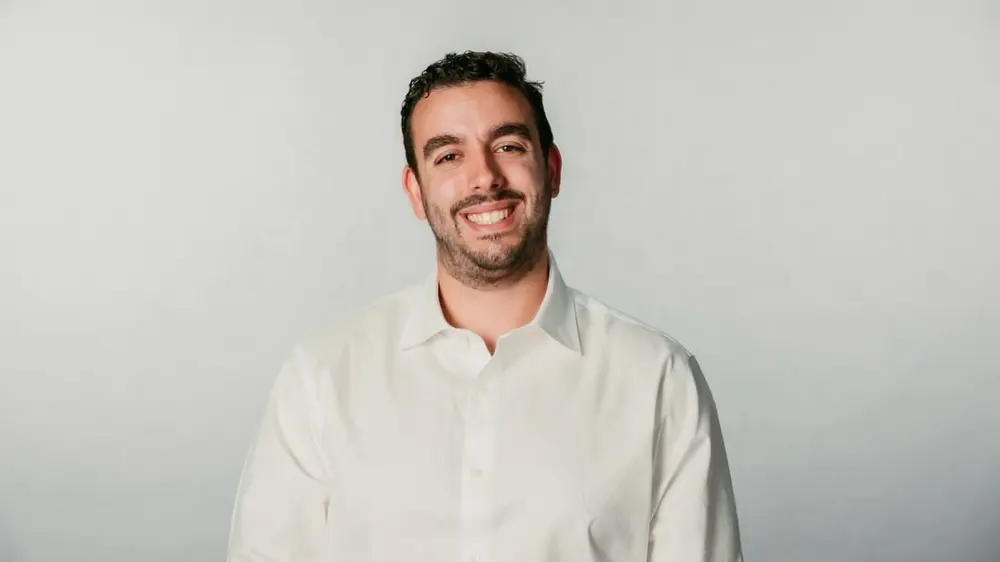

 ▶
▶  ▶
▶  ▶
▶  ▶
▶  ▶
▶ ▶
▶ ▶
▶